











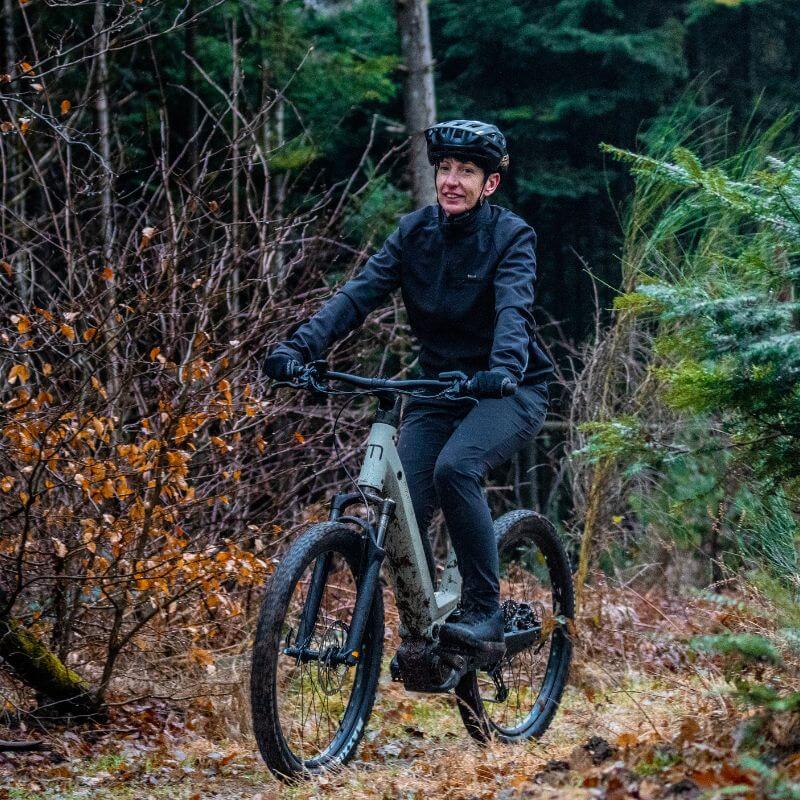
A rider with a 32 kilometer commute and a rider doing weekend rail-trail loops can both ask the same question - what ebike range do I need - and end up needing very different bikes. That is where many buying mistakes start. People focus on the biggest battery number they can find, when the better approach is to match range to how, where, and how often you actually ride.
Range matters, but not in isolation. Motor system efficiency, rider weight, wind, hills, temperature, tire choice, and how much support you use all change the answer. If you want an eBike that feels right for years, not just on paper, it helps to think in terms of realistic riding conditions rather than advertised maximums.
What eBike range do I need for real-world riding?

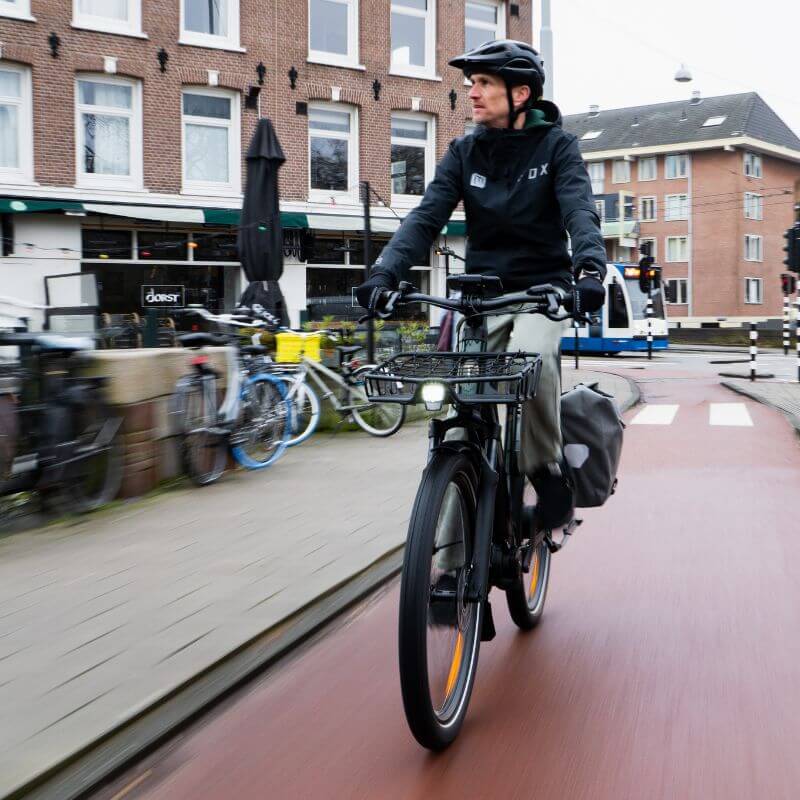
The most practical starting point is to look at your longest typical ride, not your shortest one. If you usually ride 20 kilometers each way to work, your real need is not 40 kilometers of claimed range. You need enough battery capacity to cover that route comfortably, with some reserve for headwinds, detours, cold weather, battery aging, and days when you use a higher assist mode.
For many riders, that reserve is what separates a good ownership experience from constant range anxiety. A healthy target is often 20 to 30 percent more range than your normal ride requires. If your regular day adds up to 48 kilometers, a system that can reliably deliver closer to 65-70 km's in your conditions is usually the smarter fit.
That does not always mean buying the largest battery available. Premium systems from Bosch and other reputable European platforms often deliver very usable range because the drive unit, software, and battery are engineered to work together efficiently. A well-matched mid-drive commuter can outperform a less refined setup with a bigger battery but poorer efficiency.
Start with your riding pattern, not the battery label
If you are trying to determine what ebike range do I need, think about your riding in categories.
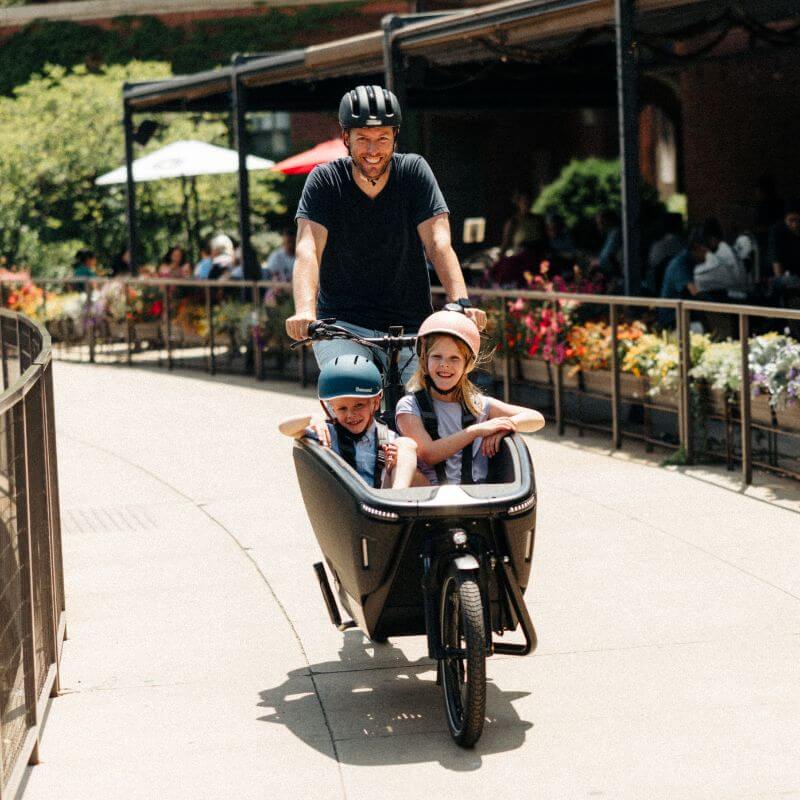
A short urban commuter riding 10 to 15 kilometers per trip with regular charging at home may be perfectly well served by a moderate-capacity battery. A recreational rider doing 32 to 57 kilometer path rides may want more headroom, especially if the route includes rolling terrain. A family using a cargo eBike for school runs, errands, and daycare pickup may need a larger battery than expected because stop-and-go riding, extra weight, and higher assist use all draw more power.
Touring riders are a category of their own. If your goal is long scenic rides, back-to-back days, or routes where charging is uncertain, battery size becomes more important. Not because every ride will empty the pack, but because larger capacity gives flexibility. You can ride into a headwind, climb more, or simply enjoy stronger support without constantly managing every watt.
The biggest factors that change eBike range

Terrain is usually underestimated. Riding flat city streets is very different from climbing repeatedly or tackling routes with sustained grades. In areas with serious elevation changes, range drops faster than many first-time buyers expect. Riders heading into hilly regions, including places with long climbs or rolling park roads, should avoid basing decisions on flat-ground estimates.
Assist level also makes a major difference. Eco mode can stretch range dramatically. Turbo mode is excellent when you need it, but it uses energy faster. Most riders do not stay in one mode for an entire ride, which is why fixed range claims can be misleading. Your real range is shaped by how often you ask the motor to do the heavy lifting.
Weight matters too. Rider weight, loaded panniers, child seats, tools, groceries, and trailer use all add up. Cargo eBikes especially should be evaluated differently from standard commuters. A battery that feels generous on a solo city bike may feel only adequate on a fully loaded family or business setup.
Then there is weather. Cold temperatures reduce battery performance, and strong winds can have a surprisingly large effect. In Canadian riding conditions, especially spring and fall, it is wise to assume less range than ideal-weather test figures suggest.
How much range do most riders actually need?
Many riders shopping for a premium eBike are well served by a realistic range band rather than a single number.
If most of your riding is local commuting, errands, and casual weekday use, roughly 40 to 70 kilometers of dependable real-world range often covers the job well. If you are riding longer mixed-terrain recreational routes, 65 to 100 kilometers can be a more comfortable target. For cargo, hilly riding, or riders who want stronger assist without compromise, larger-capacity systems start to make more sense even if the mileage target looks similar on paper.
For touring or very frequent long-distance use, planning around 100 kilometers or more may be appropriate, but only if that reflects your actual routes. Some riders overbuy battery capacity for occasional edge cases and carry the cost and weight every day. Others buy too little and find themselves charging more often than they expected. The right answer usually sits in the middle - enough capacity for confidence, without paying for a battery you rarely need.
Why battery size is only part of the answer
It is tempting to compare eBikes by watt-hours alone, but battery size is only part of the equation. High-quality mid-drive systems are designed with a different focus: instead of chasing higher wattage numbers, they prioritize efficient torque delivery, refined power output, and overall system optimization. In Canada, where the legal motor limit is 500 watts, torque—not wattage—is what truly determines how effectively an eBike accelerates, climbs hills, and carries weight.
This is where well-engineered mid-drive motors stand out. By working through the bike’s drivetrain, they use torque more efficiently and require less energy to deliver real-world performance. The result is noticeably greater range per charge when comparing the same battery capacity (Wh). In practical terms, this efficiency advantage can be significant—often delivering up to twice the riding distance of lower-quality systems, even when those bikes advertise larger batteries.
This is especially true for riders looking at well-engineered commuter, touring, and cargo models. Frame design, tire choice, rider position, and motor behavior all influence how efficiently power is used. A bike that encourages steady cadence and balanced support often delivers better practical range than one that simply advertises a larger number.
There is also a handling trade-off. Larger batteries add weight and cost. On some bikes, that is a worthwhile compromise. On others, especially compact urban models, too much emphasis on battery size can work against the ride quality people actually enjoy.
A better way to estimate your ideal range
Think in terms of your worst normal day. Not your dream ride, and not your easiest spin around the neighborhood. Ask yourself how far you ride when the weather is less than perfect, when you are carrying something, or when you are using more support because you are tired or running late.
If your routine ride is 30 kilometers round trip, do not shop for an 30 kilometer bike. Shop for a bike that can do that trip repeatedly with reserve. If your weekend rides are usually 56 km's but occasionally stretch to 75, a system that handles 75 comfortably will likely feel right over the long term.
This is also where test rides and knowledgeable consultations matter. Range is personal. Two riders on the same bike can see very different results. At Scooteretti, this is exactly why premium eBike selection is approached as a matching process rather than a battery-number contest.
When should you choose more range than you think you need?

There are a few cases where it makes sense to size up. If you ride steep terrain regularly, carry children or cargo, prefer higher assist modes, ride in colder conditions, or want to keep the bike for many years, extra capacity is often worth it. Batteries naturally lose some usable capacity over time, so buying with some margin can support better long-term satisfaction.
It also makes sense for riders who do not want to charge frequently. Some people are happy to plug in after every ride. Others want to ride several days between charges. Neither approach is wrong, but your charging habits should shape the decision.
When extra battery may not be worth it
If your rides are short, predictable, and close to home, the largest battery option may offer very little practical benefit. You may pay more, carry more weight, and gain capacity you rarely use. For urban riders in particular, efficiency, comfort, and reliability often matter more than chasing the biggest possible range figure.
That is especially true if the bike is easy to charge and your daily routine is stable. In those cases, the smarter purchase is often the one that balances battery size with the right fit, quality components, and a certified system designed for safe, long-term ownership.
The best range is the one that matches your real life. If you start with your riding habits, add a sensible reserve, and account for hills, weather, cargo, and assist level, the answer becomes much clearer. A good eBike should leave you thinking about where to ride next, not whether you will make it home.

About the Author
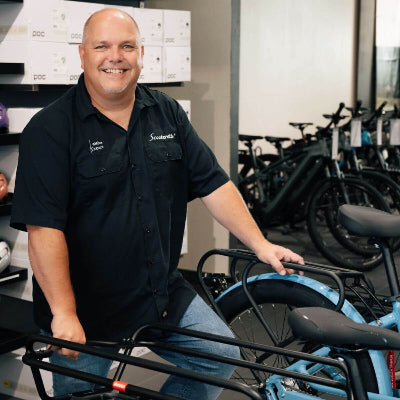
William Leishman
Founder & President, Scooteretti
William Leishman is the Founder and President of Scooteretti, one of Canada's leading electric bicycle retailers and a recognized authority in the eBike industry since 2010. As a member of the National Bicycle Dealers Association (NBDA) Advisory Board for eBike Safety, William plays a central role in shaping best practices and safety standards across North America, and is regularly featured on television, radio, print, and digital media as a trusted voice for consumers and industry professionals alike.
William's core mission is to educate Canadian consumers on choosing the right electric bicycle — one that truly fits their lifestyle, budget, and safety needs. As Canada's eBike market has exploded with new options, too many riders are purchasing the wrong bike, spending thousands across multiple purchases before finding a good fit. Scooteretti's "buy it once, buy it right" philosophy was built to solve exactly this problem, and it has helped thousands of satisfied customers make confident, informed decisions since 2010.
Beyond finding the perfect ride, William is on a personal mission to make eBike safety a national priority. He is a passionate advocate for making UL certification mandatory for every electric bicycle sold in Canada — a standard he believes every Canadian deserves, yet one that current legislation does not require. William is actively working to raise awareness among consumers and at all levels of government, because he firmly believes that no Canadian should have to risk their safety on an uncertified eBike. This isn't just a business position — it's a personal commitment he is dedicated to seeing become law.