










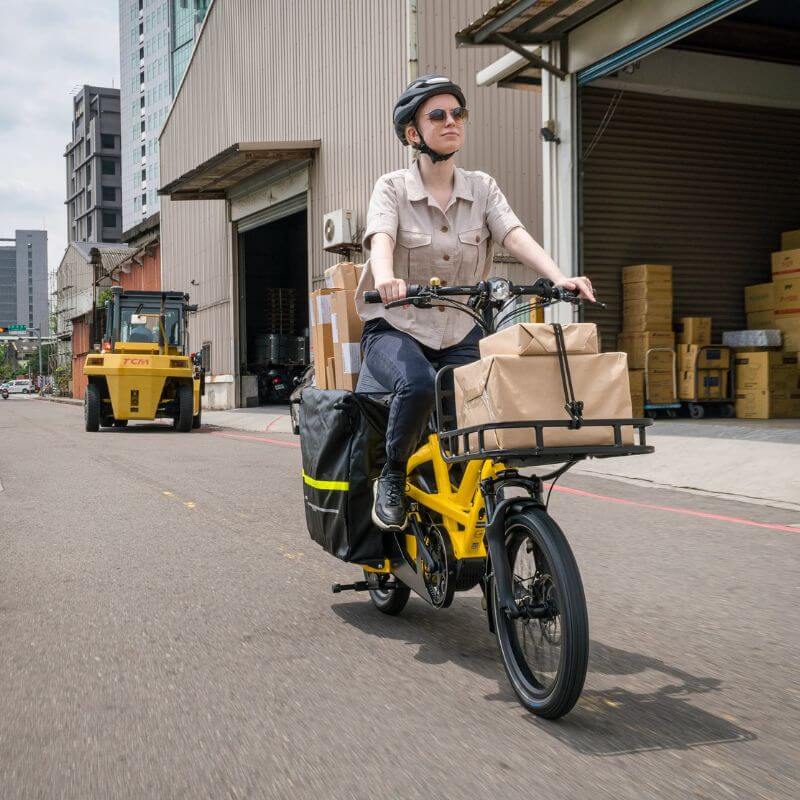
If you run local deliveries, you already know the trap: the closer your customers are, the more time you spend stuck behind traffic lights, circling for parking, and paying for short trips that barely pencil out. A cargo eBike flips that math when your routes are dense and your loads are predictable. It is not a feel-good purchase. Done right, it is a practical piece of equipment that can shrink delivery time, cut operating costs, and make same-day service easier to promise.
A cargo ebike for small business deliveries is not “one bike fits all,” though. The right setup depends on what you carry, how far you go, who is riding, and how much downtime your business can tolerate. This guide is built around those real constraints, with the trade-offs spelled out.
When a cargo eBike beats a car (and when it doesn’t)

Cargo eBikes shine in the 0 to 13 Kilometer radius where delivery density is high. If your driver is making many stops, the bike’s ability to roll straight to the door and skip parking is often the hidden advantage. The other big win is predictability. Congestion and curbside chaos are variable costs in a car, but they matter less on a bike.
There are limits. If your typical job is a 40 Kilometer round trip on high-speed roads, or you regularly haul heavy, bulky items that exceed what a bike can carry safely, a vehicle will still be part of your operation. Many businesses end up with a hybrid model: cargo eBike for the tight urban core, vehicle for the outliers.
Choosing a cargo ebike for small business deliveries: start with the job
Before you compare brands, map your actual delivery day. The best cargo bike decision is usually obvious once the use case is quantified.
Volume and weight come first. Average load is more important than maximum load, but do not ignore peak days. A bakery might carry light but bulky orders that need stable, upright space. A hardware shop might carry dense items that stress racks and brakes. If you deliver food, the question becomes container shape, temperature retention, and how quickly you can access items at each stop.
Route conditions matter just as much. Hills, rough pavement, winter grit, and curb cuts all change what “easy” feels like. If multiple employees will ride the bike, you also need a fit range that accommodates different heights and confidence levels without constant wrenching.
Cargo bike types that work for deliveries
Most delivery businesses end up choosing between longtail cargo bikes and front-load cargo bikes.
Longtail cargo bikes
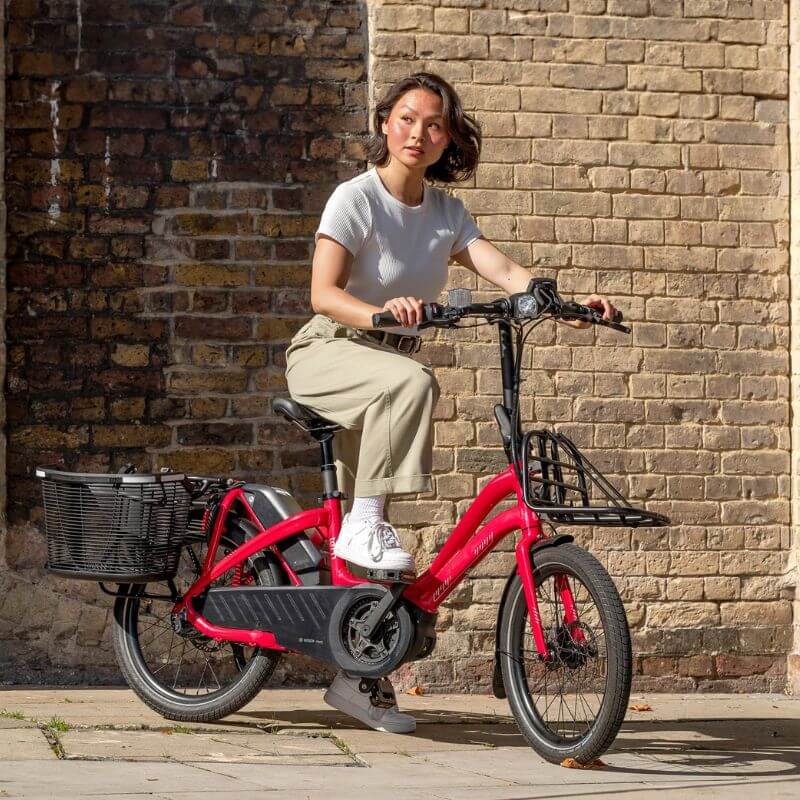
A longtail looks closer to a regular bicycle, with an extended rear rack designed to carry large panniers, a rear platform, or a child-seat-style cargo system. For deliveries, longtails tend to feel nimble and familiar. They are often easier to store, roll into a back room, or load into a van if you need to reposition.
The trade-off is carrying geometry. Heavy loads sit higher and further back, which can affect handling at low speeds. For many businesses, that is a fair exchange for flexibility and simpler parking.
Front-load (box) cargo bikes
A front-loader places cargo in a dedicated box between the rider and the front wheel, with steering designed for stability under load. If your deliveries include multiple orders, fragile items, or anything that benefits from a flat, protected space, this format is hard to beat. You also get a lower center of gravity and a more “set it and forget it” cargo area.
The trade-off is size and storage. Front-loaders take more space, can be heavier to maneuver when parked, and may require a clearer plan for indoor staging and security.
Motor systems and why premium matters in commercial use

For business use, the motor is not a fun feature. It is the difference between reliable delivery times and a bike that feels fine on day one but struggles on week ten.
Mid-drive systems from established manufacturers are common in premium cargo eBikes because they leverage the bike’s drivetrain for efficient climbing and better control under load. That matters when the rider is starting and stopping all day with a full payload. It also matters for parts availability and diagnostics. If your bike is a revenue tool, you want a motor ecosystem with predictable service pathways, not a mystery box.
Battery strategy is equally practical. You can size a battery for your typical route, but your business runs on worst-case days: cold weather, detours, headwinds, and heavier-than-usual loads. Some operations solve this with a larger battery; others prefer a second battery for quick swaps. Either way, plan around range you can count on, not the best-case number on a product page.
Drivetrains, brakes, and tires: the “unsexy” parts that decide uptime
Delivery riding is hard on components because it is repetitive: stop, start, stop, start, with extra weight. That wear pattern rewards high-quality parts.
Internal gear hubs and continuously variable systems (like Enviolo) paired with a Gates Carbon Drive belt are popular for cargo fleets because they reduce maintenance pain and tolerate day-to-day abuse better than many derailleur setups. They also allow shifting at a standstill, which is useful when riders forget to downshift before stopping at an intersection.
Braking is non-negotiable. Hydraulic disc brakes with cargo-appropriate rotor sizes are a baseline for heavy loads and all-weather use. If your delivery environment includes steep descents, prioritize braking performance over everything else.
Tires are your contact with the world. Puncture protection and load ratings matter more than speed. A “fast” tire that flats twice a month is not fast.
Cargo capacity is more than payload numbers
Manufacturers often highlight maximum payload, but businesses should think in terms of usable volume and load stability.
Ask where the weight sits, how the cargo is secured, and how quickly your rider can load and unload. A delivery rider who has to fight straps and zippers at every stop will lose time and patience. Likewise, if the load can shift, it will. The best setups feel boring because everything has a place and stays there.
Weather protection is another overlooked factor. If your deliveries include paper goods, food packaging, or electronics, you may need a sealed box, a lid, or a purpose-built cover system. That is often the difference between “we can deliver in light rain” and “we deliver regardless.”
Fit, training, and rider confidence
A cargo eBike that looks perfect on paper can still fail if it intimidates your staff.
Front-loaders ride differently than standard bikes. Longtails can feel tail-heavy until the rider learns smooth starts and stops. If you have multiple riders, look for simple adjustability: seatposts with clear markings, intuitive controls, and a riding position that reduces wrist and back strain.
Training time is part of the purchase. Plan a short onboarding that covers braking distance under load, cornering, locking routines, battery charging, and pre-ride checks. That investment pays back quickly in reduced incidents and less component damage.
Security and storage: plan this before you buy
Cargo eBikes are premium assets, and deliveries put them in public places repeatedly. Your locking strategy has to be operational, not aspirational.
If riders will stop 20 times a day, the lock needs to be quick to use correctly. Consider where the bike will be stored overnight, whether you need ground anchors, and how you will manage keys or codes across staff. Also think about indoor staging. A front-loader might need a dedicated corner of the shop; a longtail might fit on a wall-adjacent rack area.
look for e-cargo bikes that allow for the integration of a GPS tracking device with integrated alarm system like the Bosch connect module for added piece of mind, and a possible discount on insurance premiums.
Insurance is worth discussing with your provider, especially for commercial use. It is easier to arrange when you have documentation, serial numbers, and a clear storage plan.
Maintenance planning for a delivery fleet (even if it’s one bike)
The biggest operational mistake we see is treating a delivery cargo eBike like a personal bike: ride it until something breaks, then deal with the downtime.
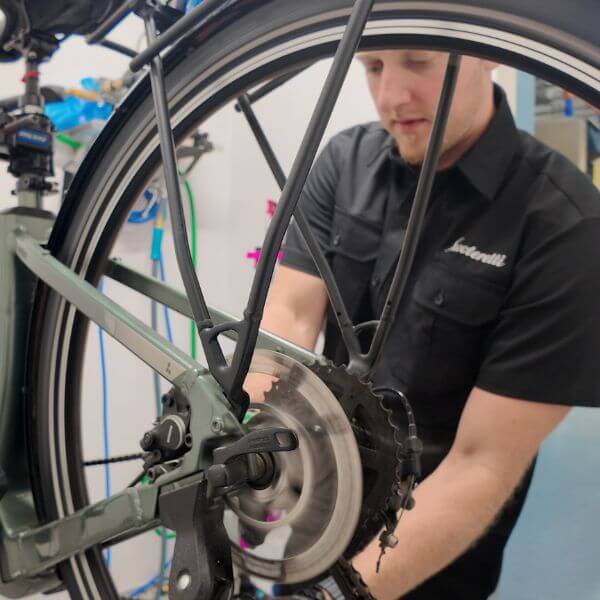
For business use, routine service is always cheaper than surprise repairs. Chains, brake pads, and tires are consumables. If you track mileage or at least weeks in service, you can schedule replacements before performance drops. Keeping a spare set of brake pads and a compatible tire on hand can turn a potential multi-day delay into a same-day fix.
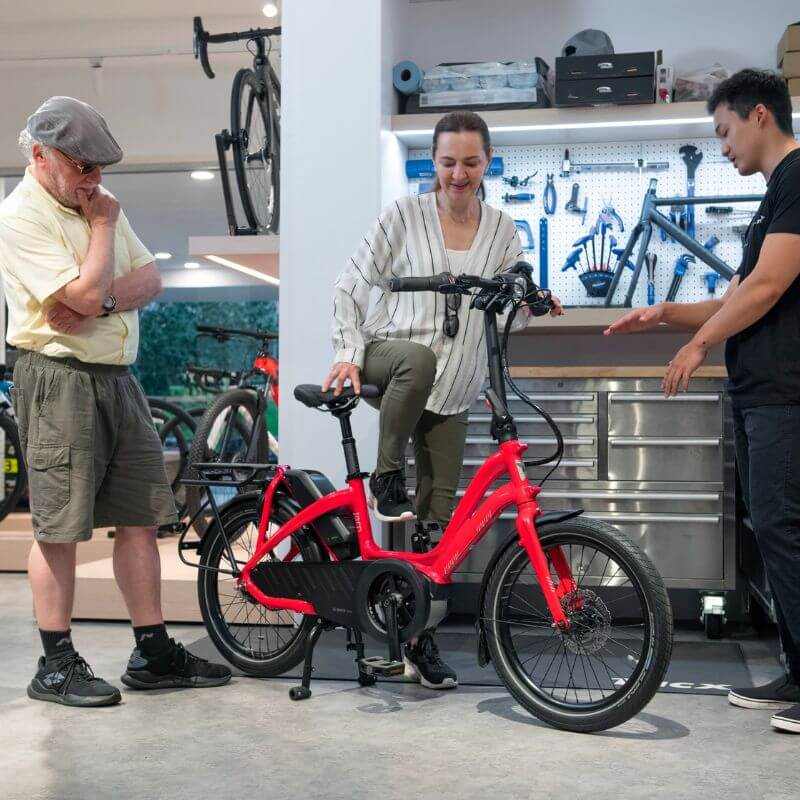
This is where buying from a retailer with certified service and access to OEM parts changes the ownership experience. When the bike is your delivery tool, you want fast answers, correct parts, and technicians who see these systems every day. If you want expert help choosing a premium cargo setup and keeping it running long-term, Scooteretti offers consultative buying support and certified service through https://scooteretti.com.
What “good value” looks like in a premium cargo eBike

For small businesses, value is not the lowest price. It is the lowest cost of reliable delivery.
A premium cargo eBike typically earns its keep through fewer service surprises, better component longevity, and a motor-battery ecosystem that is supportable for years. You are also buying stability: stronger frames, better brakes, and cargo accessories designed for real weight. Those things do not always show up in a spec-sheet comparison, but they show up in fewer missed deliveries and fewer days where the bike is sidelined.
That said, it depends on your volume. If you deliver five orders a week, a simpler setup may be enough. If you deliver fifty orders a day, the “extra” you pay for durability and serviceability often becomes the cheapest option.
A practical decision test before you commit
If you are on the fence, run a two-week simulation using your existing delivery logs. Estimate how many trips are within a bike-friendly radius, what the average load would be, and where parking time is currently killing you. Then compare that with realistic bike range under load and weather, plus the time saved per stop.
If the numbers suggest the bike will handle a meaningful portion of your routes, the next step is not guessing online. It is getting a fit check, confirming cargo accessories for your exact products, and making sure your service plan matches your delivery schedule.
A cargo eBike is at its best when it becomes boring in the right way: it starts every morning, carries what you need, and quietly turns local deliveries into something you can do faster and more profitably than the businesses still hunting for parking.

About the Author
William Leishman
Founder & President, Scooteretti
William Leishman is the Founder and President of Scooteretti, one of Canada's leading electric bicycle retailers and a recognized authority in the eBike industry since 2010. As a member of the National Bicycle Dealers Association (NBDA) Advisory Board for eBike Safety, William plays a central role in shaping best practices and safety standards across North America, and is regularly featured on television, radio, print, and digital media as a trusted voice for consumers and industry professionals alike.
William's core mission is to educate Canadian consumers on choosing the right electric bicycle — one that truly fits their lifestyle, budget, and safety needs. As Canada's eBike market has exploded with new options, too many riders are purchasing the wrong bike, spending thousands across multiple purchases before finding a good fit. Scooteretti's "buy it once, buy it right" philosophy was built to solve exactly this problem, and it has helped thousands of satisfied customers make confident, informed decisions since 2010.
Beyond finding the perfect ride, William is on a personal mission to make eBike safety a national priority. He is a passionate advocate for making UL certification mandatory for every electric bicycle sold in Canada — a standard he believes every Canadian deserves, yet one that current legislation does not require. William is actively working to raise awareness among consumers and at all levels of government, because he firmly believes that no Canadian should have to risk their safety on an uncertified eBike. This isn't just a business position — it's a personal commitment he is dedicated to seeing become law.