What is an electric bike?
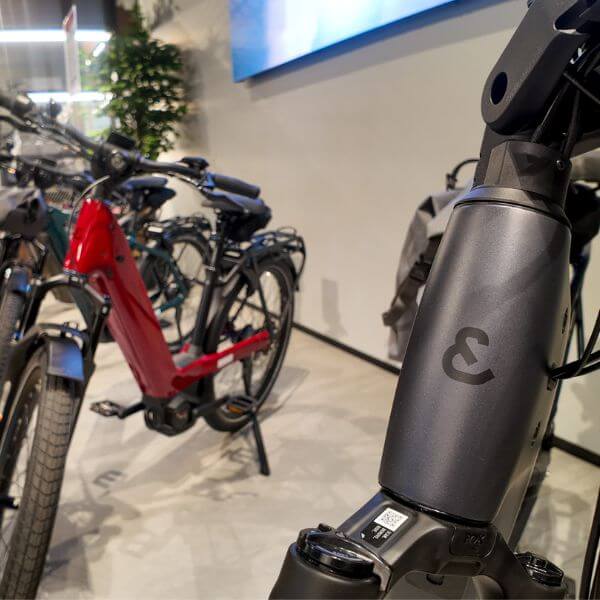
An electric bike is a bicycle with an electric motor installed on it. In Canada they are quite commonly referred to as an e-bike or electric scooter. The Federal government actually has a classification for these products called “Power Assisted Bicycles”. In Canada, an electric bike can legally reach a speed of up to 32 km’s/hr (20 miles / hour). Electric scooters are substantially cheaper than their gas counterparts. They are also a lot cheaper to maintain and to operate. In Canada, the term "power assisted bicycle" is the technical term for an e-bike and "power-assisted bicycle" is used in the Federal definition, but is carefully defined to only apply to electric motor assist, and specifically excludes internal combustion engines.
Federal Requirements
Since 2000, Canada's Motor Vehicle Safety Regulations (MVSR) has defined “Power Assisted Bicycles” (PABs) as a separate category, and which require no license to operate. PABs are currently defined as a two- or three-wheeled bicycles equipped with handlebars and operable pedals, an attached electric motor of 500W or less, and a maximum speed capability of 32 km/h from the motor over level ground. Other requirements include a permanently affixed label from the manufacturer in a conspicuous location stating the vehicle is a power assisted bicycle under the statutory requirements in force at the time of manufacture. All power-assisted bicycles must utilize an electric motor for assisted propulsion. A power-assisted bicycles may be imported and exported freely within Canada without the same restrictions placed on automobiles or a moped. Under federal law, power-assisted bicycles may be restricted from operation on some roads, bike lanes, pathways, or thoroughfares by the local municipality. Bicycle-style PABs are permitted on National Capital Commission's (NCC) Capital Pathway network, but scooter-style PABs are prohibited due to their larger size. All PABs (bicycle and scooter styles) are permitted on dedicated NCC bike lanes. There is an exception in the Ottawa / Gatineau regions where the scooter styles are permitted on the bike paths when crossing the inter-provincial bridges. All PABs are prohibited on the Gatineau Park's natural surface trails.
Provincial Requirements for Use
Eight provinces in Canada allow electric power assisted bicycles. In all eight provinces, e-bikes are limited to a 500 watt output, and cannot travel faster than 32 km/h (20 mph) on motor power alone on level ground. In Alberta prior to July 1, 2009, the limits were 750 W and 35 km/h (22 mph), but that has since changed with the introduction of Federal legislation. Age restrictions can vary by each province in Canada so it’s important to research this in your home province. All Provinces require that the rider(s) wear an approved safety helmet. Regulations may or may not require an interlock to prevent use of power when the rider is not pedaling. One major advantage of these products is that traditional vehicle licenses and liability insurance are not required to operate them. Generally, they are considered vehicles (like motorcycles and pedal cycles), so are subject to the same rules of the road as regular bicycles. Ontario is one of the last provinces in Canada to move toward legalizing power-assisted bicycles (PABs) for use on roads, even though they have been federally defined and legal in Canada since early 2001. In November 2005, "Bill 169" received royal assent allowing the Ministry of Transportation of Ontario (MTO) to place any vehicle on the road. On October 4, 2006, the Minister of Transportation for Ontario Donna Cansfield announced the Pilot Project allowing PABs which meet the federal standards definition for operation on roadways. PAB riders must follow the rules and regulations of a regular bicycle, wear an approved bicycle helmet and be at least 16 years or older. There are still a number of legal considerations for operating any bicycle in Ontario. On October 5, 2009, Ontario brought in new safety requirements for electric bikes. E-bikes, which can reach a speed of 32 kilometres per hour, are allowed to share the road with cars, pedestrians and other traffic throughout the province. The new rules limit the maximum weight of an e-bike to 120 kilograms, require a maximum braking distance of nine metres, have pedals affixed and prohibit any modifications to the bike's motor that would create speeds greater than 32 kilometres per hour. Also, riders must be at least 16 years of age, wear an approved bicycle or motorcycle helmet and follow the same traffic laws as bicyclists. Each municipality has the ability to decide where e-bikes may be used on their streets, bike lanes and trails. The most common regulations that we see are that electric bicycles are treated just like a traditional bicycle and have no restrictions while the scooter style E-bikes may only be permitted to be ridden on the roadways, bike lanes and shoulders. So one should verify with their local municipality concerning their permitted uses. One must remember that e-bikes are not be permitted on 400-series highways, expressways or other areas where bicycles are not allowed due to the higher speed limits travelled by faster moving vehicles. Riding an e-bike under the age of 16 or riding an e-bike without an approved helmet carries fines. For all other traffic offences, e-bike riders will be subject to the same penalties as cyclists. We suggest that if owners are unaware of their local laws and where these products may be used to contact their local municipal office or local Police departments where one can get information on their local municipal laws. For any questions we invite our readers to
contact Scooteretti anytime for any additional information about e-bikes or questions that they may have.